

There is no doubt that even the strongest floor coatings can fail if one invisible enemy isn’t dealt with first, i.e., moisture. Whether it’s in a warehouse, a garage or a product facility, moisture rising through concrete slabs can wreak havoc on otherwise perfect epoxy and polyurethane systems. Bubbles, peelings, discolouration and adhesive lift aren’t just cosmetic problems; they are the signs that water has found its way into your flooring system.
Let’s unpack what happens when moisture gets the better of you, what warning signs to look for and how a moisture Vapor barrier epoxy can stop the problem before it starts.
The Real Cost of Ignoring Moisture.
Concrete isn’t just as solid as it looks. Beneath the surface, it’s a porous sponge filled with tiny capillaries that absorb and release moisture over time. When a coating is applied to a slab that hasn’t been properly tested or sealed, that trapped Vapor pressure pushes upward, and it doesn’t take long for the damage to appear.
Here are a few real-world examples of what happens when coatings fail due to moisture.
Warehouse Epoxy Gone Wrong:
A facility manager in a distribution centre noticed blistering and fish eyes forming on a newly installed epoxy floor within weeks. It is due to the fact that ground moisture from an unsealed concrete base pushes Vapor bubbles up through the epoxy layer.
Retail Store Discolouration:
In a boutique space, a beautiful metallic epoxy floor started turning cloudy and patchy. Moisture reacted with unprimed concrete, creating osmotic pressure and discolouration in high traffic zones.
Garage Floor Peeling
A homeowner’s DIY epoxy project began lifting in strips near the garage door. The issue wasn’t the coating; it was moisture migrating from underneath due to a lack of Vapor barrier primer.
These aren’t rare occurrences. Studies estimated that moisture-related flooring failure costs US businesses over a billion dollars annually, not including downtime, labour or reinstallation expenses.
How Moisture Vapor Barrier Epoxies Stop Failures Before They Start
The good news? These problems are preventable. A moisture Vapor barrier (MVB) epoxy acts as a seal between your concrete substrate and your decorative or functional topcoat.
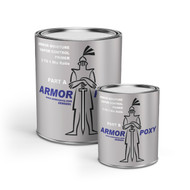
At ArmorPoxy, our ArmorPoxy Moisture Barrier Epoxy Primer is specifically engineered to block Vapor transmission, even from slabs with high moisture levels. Here’s why including one makes all the difference.
- Seals the concrete pores: It creates a dense, impermeable layer that stops water Vapor from pushing through.
- Improves Adhesion: By stabilising the substrate, it provides a uniform surface for the next coat to bond securely.
- Prevents Discolouration and Blistering: No trapped Vapor means your epoxy colour and gloss remain consistent over time.
- Extends System Longevity: Floors stay intact longer, reducing maintenance and reapplication cycles.
Before installation, professionals often perform a calcium chloride test and RH test to measure moisture levels in the slab. If readings are above recommended thresholds, a moisture barrier primer is non-negotiable.
Warning Signs that Moisture is Getting Through
Even after installation, floors may start to show subtle distress signals that indicate moisture intrusion. Recognising them early can save you from a full-blown failure.
- Bubbling or Blistering: Small domes on the floor surface are signs of Vapor pressure lifting the coating.
- White Salts or Efflorescence: Chalky residues around cracks or joints indicate the movement of water through the concrete layer.
- Peeling: Sections of coating, even concrete, lift cleanly off the substrate at the points of adhesion loss due to trapped Vapor or moisture.
- Musty Odour or Dampy Feel: In basements or enclosed areas, a damp smell can signal underlying Vapor problems.
If any of these signs appear, the fix isn’t just recoating the floor. It’s identifying and stopping the source of moisture first.
Best Practices to Moisture-Proof Your Next Flooring Project
Whether you are having a renovation or commercially building a plant or home garage, every concrete floor should go through a moisture check before coating. Here’s how to build in protection from day one.
- Test the Slab: Always perform moisture tests; never assume new concrete is dry enough.
- Use the Right Primer: Apply a moisture Vapor barrier epoxy before decorative or high building coatings.
- Watch the Weather: Avoid installing coatings during humid or rainy conditions that can delay curing or trap moisture.
- Allow Proper Curing: Rushing application can seal in moisture that hasn’t fully evaporated.
- Maintain and Inspect: Periodic cleaning and inspection prevent small cracks from appearing, and they can be repaired before cracks appear.
Keep Moisture in Check, Keep Your Floors Perfect
Epoxy and resinous floors are built to last, but only if the foundation beneath them stays dry and stable. Moisture might be invisible, but its damage isn’t. It shows up as bubbles, stains or entire sections peeling off the slab.
By adding an Armour Poxy Moisture Vapor Barrier Epoxy layer to your system, you’re not just installing a coating; you’re building a shield. A small step at the start saves countless hours of rework and ensures your floor performs beautifully for years to come.