

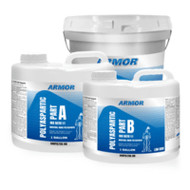
For many years, epoxy floor coatings have been the gold standard in both residential and commercial spaces. Durable, chemical-resistant and affordable, epoxy has earned a reputation for being a dependable floor solution. However, the environment has become more demanding due to global warming, and installation timelines shrink. A new generation of coatings has stepped into the spotlight, i.e., polyaspartic, polyurea and hybrid systems.
At ArmorPoxy, we don’t just offer epoxy. We also provide polyaspartic and polyurea kits that have the capacity to outperform traditional systems in speed, UV stability and long-term toughness. So, when is epoxy the best choice, and when should you upgrade to something more advanced? Let’s break it down.
Epoxy Coatings: The Industry Workhorse
Epoxy flooring systems have long been the go-to for garages, warehouses and industrial facilities, and for good reason. They form a thick, strong and chemical-resistant surface that can last for years with proper preparation.
Advantages of Epoxy
- Excellent adhesion to concrete.
- High chemical and abrasion resistance
- Cost-effective and easy to install
- Available in numerous finishes and colours
Limitation of Epoxy
Although epoxy is ideal for basements, light manufacturing areas, showrooms and spaces where UV exposure is minimal and installation time is flexible. However, it also has some limitations.
- They’re sensitive to temperature during application.
- Full curing can take several days.
- They tend to amber or yellow when exposed to sunlight.
- They are less flexible, meaning cracks or thermal expansion in concrete can cause issues over time.
For projects that require faster turnaround or direct sunlight resistance, epoxy may not be the top performer, and it is actually polyaspartic and polyurea coatings that are taking the lead.
Polyurea Coatings: The Speed Champion
Polyurea coatings were originally developed for industrial and military use, designed to cure in extreme conditions and deliver outstanding impact and chemical resistance.
Why Polyurea Stands Out
- Ultra-fast curing: some systems cure in as little as one hour.
- Temperature tolerance: it can tolerate a wider range of temperatures compared to epoxy.
- Exceptional flexibility: expands and contracts with the concrete, reducing the risk of cracking.
- Superior Durability: Resistant to abrasion, chemicals and mechanical wear.
Because polyurea cures so fast, it requires experienced application, making it better suited for professional installers or commercial projects. However, ArmorPoxy’s polyurea kits are formulated to offer more manageable working times, giving DIY users the chance to benefit from this technology too.
Best uses,
- Factory floors
- Automotive workshops
- Freezers or cold storage facilities
- Outdoor concrete surfaces
If your project demands a quick return to service, such as in a warehouse that can’t afford downtime, polyurea is an unbeatable choice.
Polyaspartic Coating: The Next Generation Coating
Polyaspartic coatings are technically a type of polyurea but with key formulation differences that make them even more versatile. They offer the speed and strength of polyurea with a longer working time, allowing more flexibility during installation.
Advantages of Polyaspartic
- UV stable: it won't yellow or fade in sunlight, ideal for garages, patios and outdoor spaces.
- Fast recoat and cure: floors can often be returned to use within 24 hours.
- High gloss and clarity: Enhances decorative flake or metallic finishes, and it becomes the next generation coating.
- Temperature Flexibility: it can be applied in both hot and cold climates.
ArmorPoxy’s polyaspartic coating systems combine advanced chemistry with user-friendly formulations, providing a professional-grade finish that resists fading, staining and wear.
Best Uses:
- Garage floors
- Outdoor patios or pool decks
- Commercial showrooms
- Areas with constant UV exposure
Polyaspartic is the premium choice when aesthetics, speed and sunlight durability all matter.
Hybrid Systems: The Best of Both Worlds
For many projects, a hybrid epoxy polyaspartic system offers the perfect balance. Typically, epoxy serves as the base coat (for strong adhesion and thickness), and polyaspartic or polyurea is applied as the topcoat (for UV resistance and quick cure).
Benefits of Hybrid Systems
- Superior adhesion from epoxy
- Fast return to service thanks to polyaspartic polyurea
- Enhanced chemical and UV resistance
- Long-term durability with a glossy finish
This combination is ideal for large commercial projects or high-traffic areas where downtime must be minimised, but performance can’t be compromised.
The ArmorPoxy Advantage
At ArmorPoxy, we design coating systems that fit every environment, not just one size fits all. From our industrial-grade ArmorPoxy Epoxy Kit to Polyaspartic 85 or ArmorUltra Polyurea Systems, each product is designed and engineered keeping the demand and specific flooring challenges in mind. Whether it’s sunlight exposure, fast cure requirements or extreme wear.
By choosing the right coating chemistry for the right setting, you can ensure longer-lasting performance, fewer call-backs and a flawless floor that stands the test of time.
Epoxy remains an excellent, cost-effective option, but when the environment demands more speed, sunlight resistance or durability, polyaspartic and polyurea coatings step up.
When you're ready to move beyond standard epoxy, ArmorPoxy advanced coating systems give you the flexibility, reliability and speed your project deserves.