

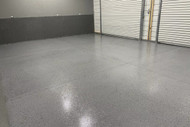
If you're considering a floor upgrade for your garage, basement, or commercial space, you've probably come across polyurea floor coating as an option. With so many products on the market, epoxy, polyaspartic, paint, interlocking tiles... It's fair to ask: what actually sets polyurea apart, and how tough is it in the real world? Here's a closer look at what makes polyurea one of the most resilient floor coating solutions available today.
What Makes Polyurea Floor Coating So Strong?
Polyurea floor coating is engineered for serious strength. It delivers exceptional resistance to impact, meaning it won't chip, crack, or peel under the weight of heavy vehicles, machinery, or constant foot traffic. Whether you're parking a full-size truck, running a busy workshop, or managing a high-traffic commercial warehouse, a properly applied polyurea coating will hold its ground for years without breaking down. Its tensile strength far exceeds that of standard epoxy, making it the go-to choice for environments where floors genuinely take a beating.
Can Polyurea Floor Coating Resist Chemicals and Stains?
Yes, and this is one of its most important real-world advantages. Oil spills, gasoline, battery acid, hydraulic fluid, and even harsh household cleaners that would stain or degrade ordinary floor coatings are no match for polyurea. The coating creates a non-porous surface that simply won't absorb contaminants, making cleanup fast and keeping the floor looking clean long-term.
This is a major reason why auto shops, manufacturing facilities, and industrial spaces rely on polyurea floor coating. But it's just as valuable in residential garages, where a single oil leak or chemical spill can permanently stain an unprotected concrete floor.
Will Polyurea Crack or Peel Over Time?
This is where polyurea has a significant edge over traditional coatings. Concrete moves, it expands and contracts with temperature changes throughout the year, and over time those micro-shifts can crack a rigid coating right off the surface. Polyurea floor coating is inherently flexible, with an elongation rate that allows it to move with the concrete rather than against it.
This flexibility is a critical reason why polyurea outperforms many traditional epoxy coatings in real-world conditions. Epoxy is rigid, and in climates with significant temperature swings like cold northern winters followed by hot summers, that rigidity becomes a liability. Polyurea stays bonded and intact through all of it.
Does Polyurea Floor Coating Yellow or Fade in Sunlight?
No, polyurea floor coating is UV stable. Your floor will maintain its original color and gloss for years, whether it's installed in a showroom, a garage with oversized windows, or a commercial space with skylights.
This UV resistance also makes polyurea a strong candidate for outdoor and semi-outdoor applications: covered patios, loading docks, and entryways areas where a non-UV-stable coating would fail quickly.
How Long Does Polyurea Floor Coating Last?
When applied correctly, a high-quality polyurea floor coating like ArmorPoxy's SPGX system is built to last well over a decade with minimal upkeep. Polyurea also cures significantly faster than epoxy, meaning minimal downtime for your space. Day-to-day maintenance is straightforward: regular sweeping and an occasional mop is all it takes to keep it performing and looking its best.
Is Polyurea Floor Coating Better Than Epoxy?
Epoxy is a solid coating, but polyurea outperforms it in nearly every durability category: flexibility, UV resistance, cure time, and chemical resistance. Epoxy can be a cost-effective entry point, but homeowners and facility managers who want a coating that truly lasts without fading, cracking, or peeling will find that polyurea is worth the upgrade.
Who Should Use Polyurea Floor Coating?
Polyurea floor coating is a strong fit for anyone who needs a floor that performs under pressure. That includes homeowners upgrading a garage, auto enthusiasts building a showroom-quality space, contractors finishing commercial or industrial floors, and facility managers who can't afford extended downtime. If durability, chemical resistance, and long-term value are priorities, polyurea belongs at the top of your list.
The Bottom Line
Polyurea floor coating is durable in the ways that matter most. It handles impact, resists chemicals, flexes with the substrate, holds its color under UV exposure, and cures fast enough to get your space back in action quickly. For anyone tired of floors that chip, stain, fade, and fail, polyurea delivers a long-term solution that more than justifies the investment.
Ready to upgrade your floor? Explore ArmorPoxy's polyurea floor coating systems and find the right solution for your space.